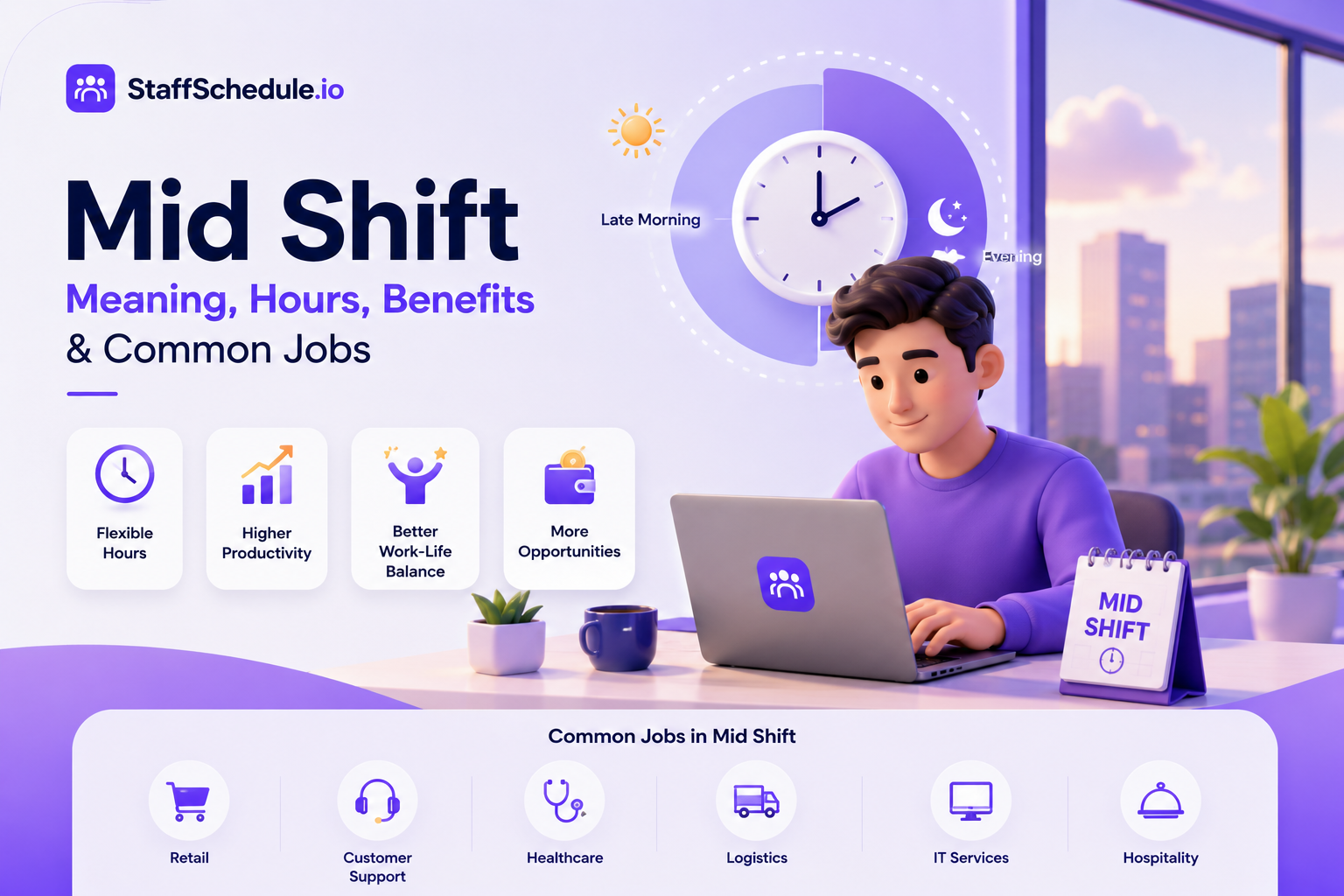
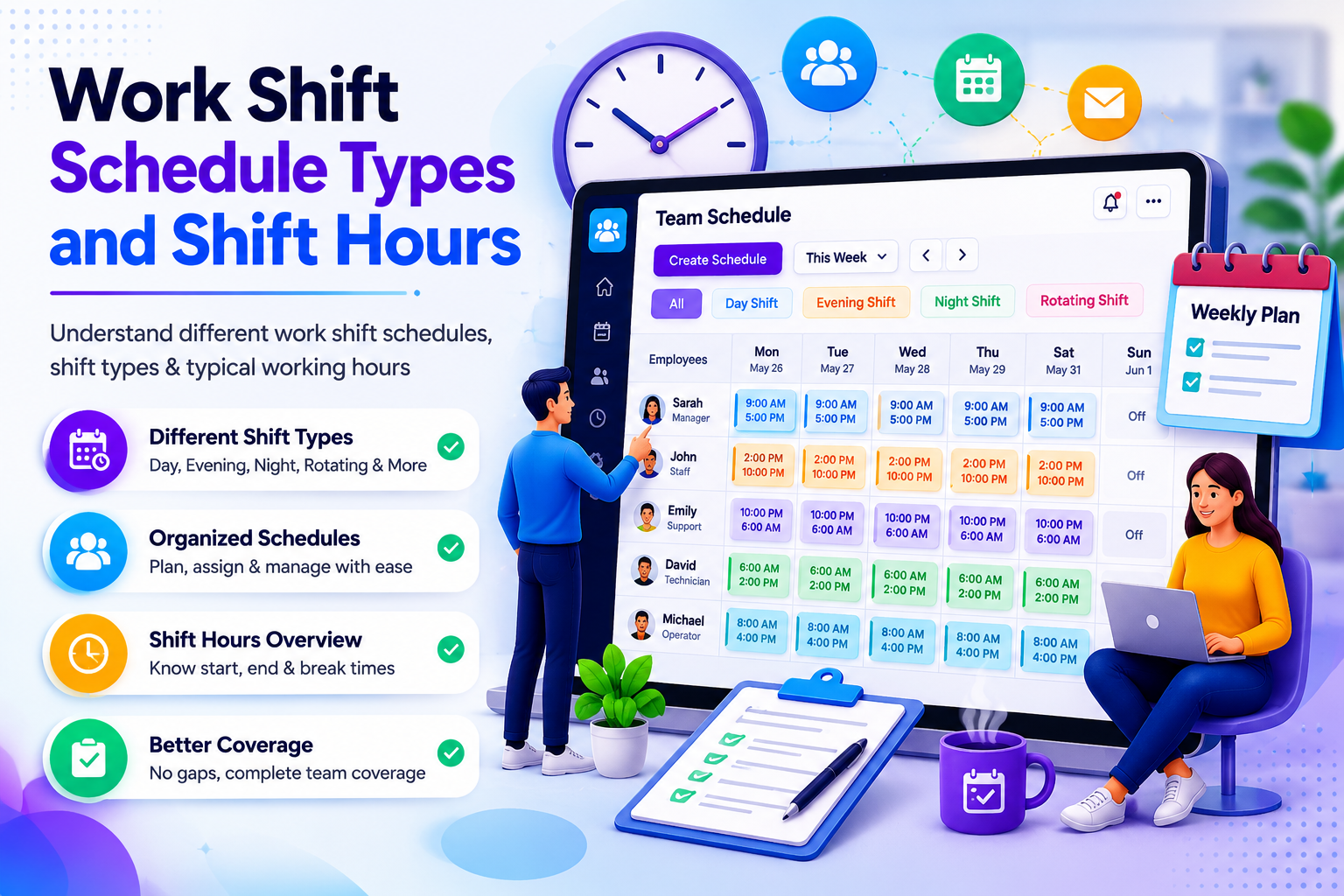
A work shift schedule is more than a list of employee working hours. It helps businesses decide who will work when each shift begins and how daily tasks are covered without leaving gaps.
Different workplaces follow different schedules. A small office may only need one daytime shift, while hospitals, factories, retail stores and customer support teams often divide work into multiple shifts to keep everything running throughout the day.
In this guide you'll learn what a work shift schedule is, the most common shift types, typical working hours and a few simple tips for choosing the right schedule for your team.
What Is a Work Shift Schedule?
A work shift schedule is a plan that shows when employees start work, finish work and which shift they are assigned. It helps everyone know their working hours before the week or month begins.
Some businesses use one shift each day while others divide work into two or three shifts to keep services available for longer hours. The schedule depends on the type of business, the number of employees and the hours of operation.
How a Work Shift Schedule Works
A manager creates the schedule by assigning employees to specific shifts based on staffing needs. Once the schedule is shared each employee knows their working days, shift times and expected hours.
A clear shift schedule reduces confusion helps teams stay organized and makes it easier to plan work in advance.
Common Types of Work Shift Schedules
Every workplace follows a schedule that matches its working hours and staffing needs. Some teams work the same shift every day while others rotate or cover different time periods.
Fixed Shift Schedule
A fixed shift gives employees the same working hours every day or every week. This schedule is common in offices, schools and many retail businesses because employees know exactly when they are expected to work.
Rotating Shift Schedule
A rotating shift changes an employee's working hours after a set period. For example someone may work a day shift one week and move to an evening or night shift the next.
Split Shift Schedule
A split shift divides one workday into two separate working periods with a long break in between. It is often used in restaurants, transportation and other businesses with busy hours at different times of the day.
Three-Shift Schedule
A three-shift schedule keeps a workplace running throughout the day by dividing employees into morning, evening and night shifts. It is widely used in hospitals, factories and other workplaces that operate 24 hours a day.
On-Call Shift Schedule
An on-call shift means employees are available if they are needed. Instead of working a fixed schedule they are contacted when extra support is required.
Common Work Shift Hours
Work shift hours are not the same in every workplace. Some employers follow regular business hours while others schedule employees in different time blocks to provide longer or continuous service.
| Shift Schedule | Common Hours |
| Morning Shift | 6 AM – 2 PM |
| Day Shift | 8 AM – 4 PM or 9 AM – 5 PM |
| Mid Shift | 11 AM – 7 PM or 12 PM – 8 PM |
| Evening Shift | 2 PM – 10 PM |
| Night Shift | 10 PM – 6 AM |
These are some of the most common work shift hours but every company can set its own schedule. The starting and finishing times often depend on business hours, the industry and the number of shifts planned each day.
How to Choose the Right Work Shift Schedule
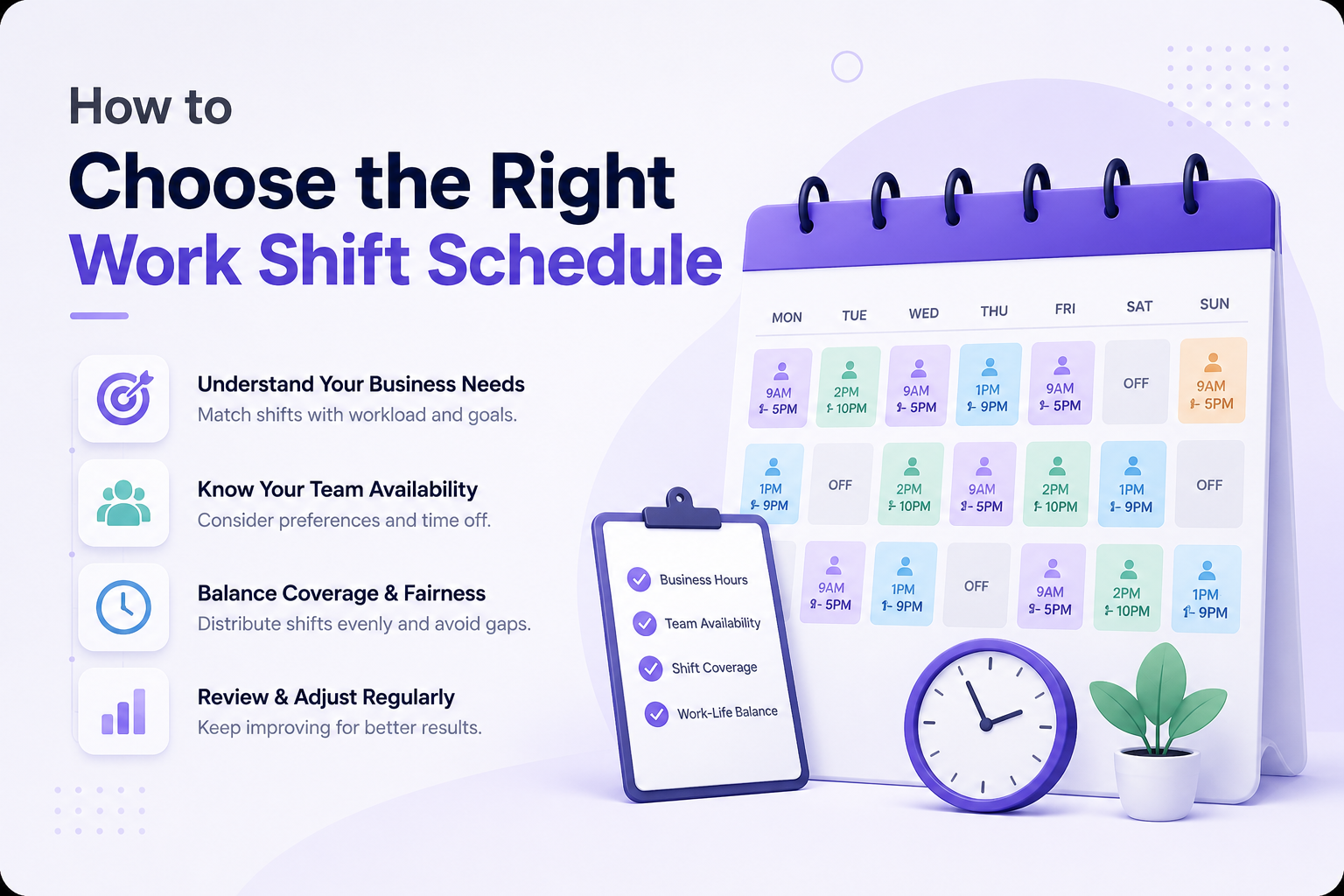
The best work shift schedule depends on the type of work and the people doing it. A schedule that works well for one team may not be the right fit for another.
Consider Your Business Hours
Start by looking at the hours your business is open. Your shift schedule should match the times when employees are actually needed instead of following a fixed pattern for every day.
Match Employee Availability
A good schedule also considers employee availability. When possible, assign shifts that fit their working hours. This can reduce last-minute changes and make the schedule easier to follow.
Keep Shift Rotations Fair
If your team works rotating shifts, give everyone a fair chance to work different hours. A balanced rotation helps prevent the same employees from always getting the least preferred shifts.
Common Scheduling Mistakes to Avoid
Even a well-planned schedule can create problems if small details are ignored. A few simple mistakes often lead to confusion and unnecessary shift changes.
- Publishing the schedule too late
- Assigning the same employee to every busy shift
- Ignoring approved leave requests
- Changing shifts without informing the team
- Giving employees too little time between shifts
Checking the schedule before sharing it can prevent many of these issues. Small changes made early are usually easier than fixing problems after employees have already planned their week.
Frequently Asked Questions
Final Thoughts
A clear work shift schedule makes it easier for employees to know when they are expected to work and helps managers organize daily shifts without confusion. Every workplace follows its own schedule so there is no single approach that fits every team.
Whether you use fixed, rotating, split or three-shift schedules the right choice is the one that matches your working hours and keeps the schedule easy for everyone to follow.