Not every job follows the same schedule. Some employees start work early in the morning while others work in the afternoon or overnight. To keep businesses running for longer hours many workplaces divide the day into different shifts.
The most common work schedules are first shift, second shift and third shift. Each shift has its own timing and is suited to different types of jobs and lifestyles.
If you have ever wondered what 2nd shift hours are or how they compare with other work schedules it helps to understand how these shifts are usually arranged and what makes each one different.
Related Read
What Is a Work Shift?
A work shift is the period of time an employee is scheduled to be on duty. Companies use shifts to decide when employees start and finish work.
The length of a shift depends on the workplace. In many jobs employees work for eight hours while some businesses use longer or shorter schedules.
Shifts help employers organize coverage throughout the day and make sure important tasks are handled at the right time.
Simplify Shift Scheduling for Your Team
Create schedules, manage shift changes, and keep every shift covered with StaffSchedule.io.
Start Free TrialWhat Are First, Second, and Third Shifts?
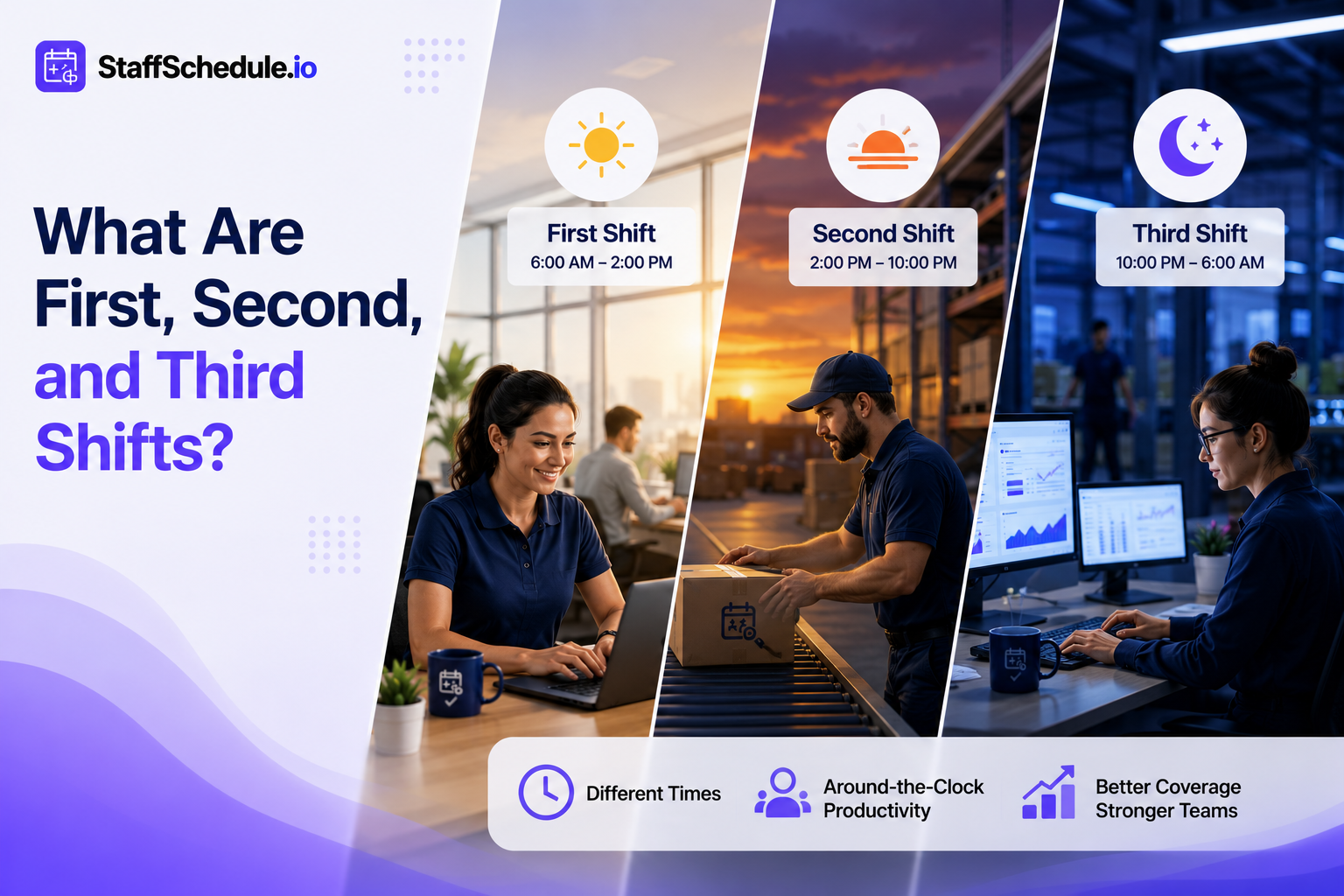
Most workplaces that use shift schedules divide the day into three main parts. These are commonly known as first shift, second shift and third shift.
According to the U.S. Bureau of Labor Statistics (BLS), millions of employees work evening, night, rotating, and other nontraditional schedules across different industries.
First Shift Hours
First shift is the standard daytime schedule that many people are familiar with. It usually starts in the morning and ends in the afternoon.
Typical first shift hours:
- 7:00 AM to 3:00 PM
- 8:00 AM to 4:00 PM
- 9:00 AM to 5:00 PM
Second Shift Hours
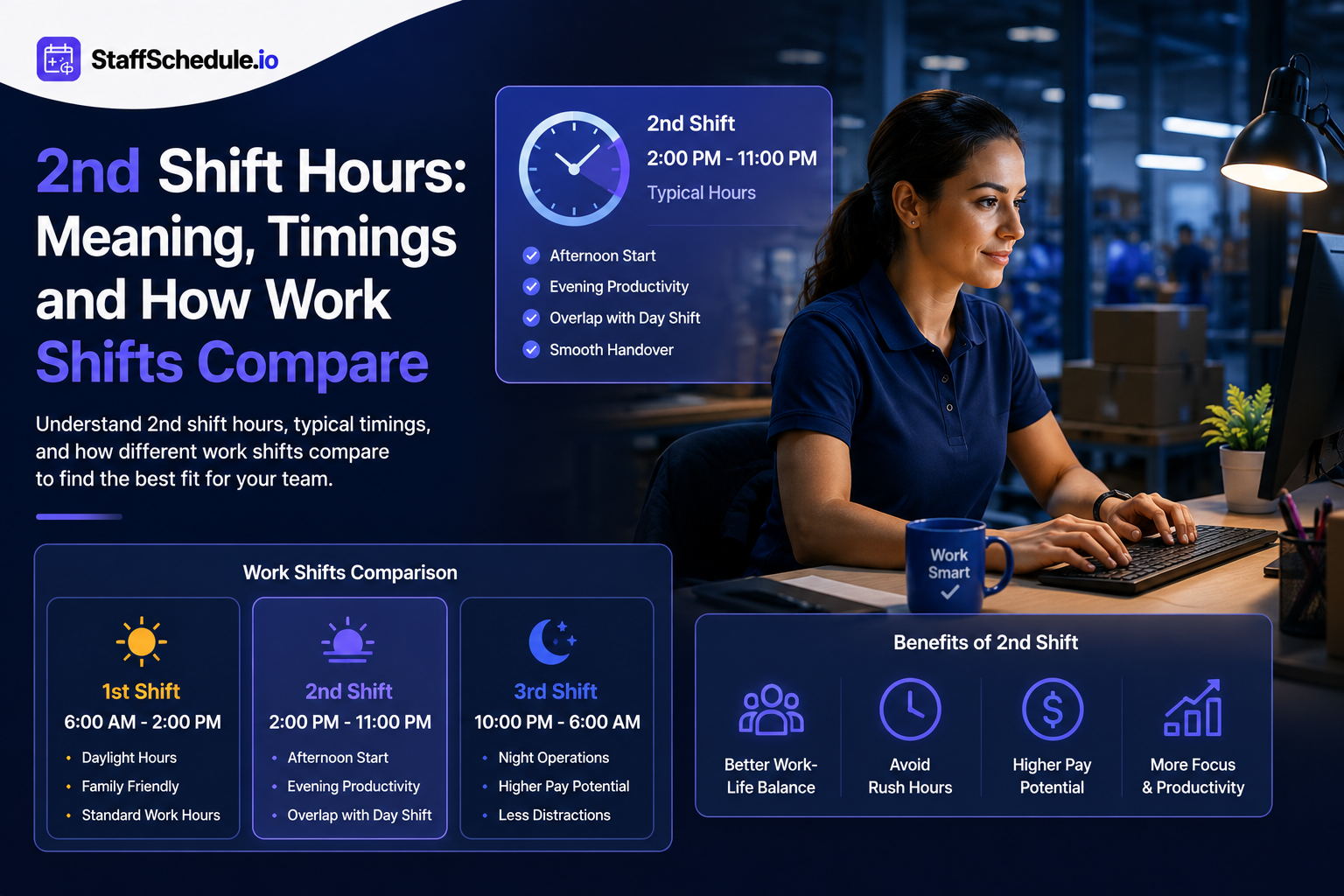
The second shift begins later in the day and often continues into the evening. It starts after the first shift ends and is common in industries that operate beyond regular business hours.
Typical second shift hours:
- 3:00 PM to 11:00 PM
- 4:00 PM to 12:00 AM
- 2:00 PM to 10:00 PM
Third Shift Hours
The third shift is often called the night shift. Employees work overnight and finish their shift in the morning.
Typical third shift hours:
- 11:00 PM to 7:00 AM
- 10:00 PM to 6:00 AM
- 12:00 AM to 8:00 AM
Typical Shift Timings at a Glance
While shift hours can vary from one workplace to another most companies follow a similar schedule. The table below shows the hours that are commonly used.
| Shift | Typical Start Time | Typical End Time |
| First Shift | 7:00 AM – 9:00 AM | 3:00 PM – 5:00 PM |
| Second Shift | 2:00 PM – 4:00 PM | 10:00 PM – 12:00 AM |
| Third Shift | 10:00 PM – 12:00 AM | 6:00 AM – 8:00 AM |
These hours are only examples. Some businesses may adjust start and end times based on their staffing needs, industry requirements or operating hours.
What Is Considered a Second Shift?
A second shift usually begins in the afternoon and ends later in the evening. In many workplaces it starts when the first shift finishes and continues until night.
Most second-shift employees start work between 2:00 PM and 4:00 PM. Their shift often ends between 10:00 PM and 12:00 AM, depending on the company and industry.
This schedule is common in manufacturing plants, warehouses, hospitals, customer support teams, restaurants, hotels and other businesses that operate beyond normal daytime hours.
Many employees prefer the second shift because they do not have to wake up very early in the morning. It also allows them to take care of personal tasks during the first part of the day before starting work.
However, working in the evening can make it harder to attend social events or spend time with family members who follow a regular daytime schedule.
Related Read
How First Second and Third Shifts Are Different
Although all three shifts cover the same 24-hour period the experience of working each one can be very different. The schedule you choose can affect your daily routine sleep pattern and work-life balance.
Work Schedule
The biggest difference is the time employees start and finish work.
- First shift takes place during normal daytime hours.
- Second shift covers the afternoon and evening.
- Third shift runs overnight and ends in the morning.
Lifestyle Impact
Each shift fits a different lifestyle.
Employees on the first shift usually have evenings free after work. Those on the second shift have more free time during the morning and early afternoon. Third-shift workers often need to sleep during the day which can require major adjustments to their routine.
Common Industries
Some industries use all three shifts while others mainly use one or two.
| Shift | Common Workplaces |
| First Shift | Offices, schools, banks, retail stores |
| Second Shift | Warehouses, restaurants, hotels, customer support |
| Third Shift | Hospitals, security services, manufacturing plants, transportation |
The best shift often depends on a person's schedule, family responsibilities and personal preferences rather than the shift itself.
Pros and Cons of Working the Second Shift
Second shift works well for some people but may not be the right fit for everyone. Before accepting an evening schedule it helps to understand both the benefits and the challenges that come with it.
Pros of Working the Second Shift
- No need to wake up very early in the morning.
- More time during the day for appointments and personal errands.
- Less morning traffic in many areas.
- A good option for people who feel more productive later in the day.
- Can fit well with school or other daytime commitments.
Cons of Working the Second Shift
- Less free time during evenings when family and friends are available.
- Social gatherings and events may be harder to attend.
- Returning home late can affect sleep routines.
- Some services and businesses may be closed after work.
- It can take time to adjust to an evening schedule.
For many employees the second shift offers a good balance between daytime and overnight work. Whether it feels comfortable often depends on personal habits and daily responsibilities.
Is Second Shift Right for You?
There is no single shift that works best for everyone. The right choice depends on your daily routine, personal responsibilities and preferred working hours.
Second shift may be a good fit if you prefer starting work later in the day. Many people like having extra time in the morning for exercise, studying, appointments or other activities before work begins.
It can also be a practical option for students, parents and employees who need more flexibility during daytime hours.
On the other hand if you enjoy spending evenings with family and friends a second-shift schedule may feel limiting. Some people also prefer finishing work earlier and having the rest of the day free.
Before choosing a shift think about your sleep habits, family schedule, travel time and personal commitments. A schedule that works well for one person may not work as well for someone else.
Related Read
Frequently Asked Questions
What is 2nd & 3rd shift?
Second shift usually runs during the afternoon and evening. Third shift is the overnight schedule that continues until the morning.
What do 1st, 2nd, and 3rd shifts mean?
These terms are used to describe different work schedules. First shift covers daytime hours, second shift covers evening hours and third shift covers overnight hours.
What's better, 1st or 2nd shift?
Neither shift is better for everyone. First shift suits people who prefer early schedules while second shift works well for those who like starting work later in the day.
Is 11 to 7 second shift?
No. An 11 PM to 7 AM schedule is usually considered a third shift because it takes place overnight.
What's the best shift to work?
The best shift depends on your lifestyle, sleep habits and personal responsibilities. What works well for one person may not work well for another.
Final Thoughts
Second shift hours usually fall between daytime and overnight schedules, making them a popular choice in many industries. While the exact hours can vary, most second shifts start in the afternoon and end later in the evening.
Understanding how first, second and third shifts work can make it easier to choose a schedule that fits your routine. The right shift is the one that matches your daily life, responsibilities and preferred working hours.