Not every employee starts work early in the morning or works through the night. Many businesses also rely on a mid shift to keep operations running during the busiest part of the day. This schedule helps maintain smooth service when customer demand begins to increase and continues into the evening.
If you have seen a job posting that mentions a mid shift mening you may wonder what it actually means and what hours it includes. The answer depends on the workplace but most employers follow similar time ranges.
This guide explains the meaning of a mid shift, the hours it usually covers, how it compares with other shifts and the types of jobs where it is most commonly used.
Related Read
Businesses that operate overnight often rely on Night Shift Hours to provide continuous customer service.
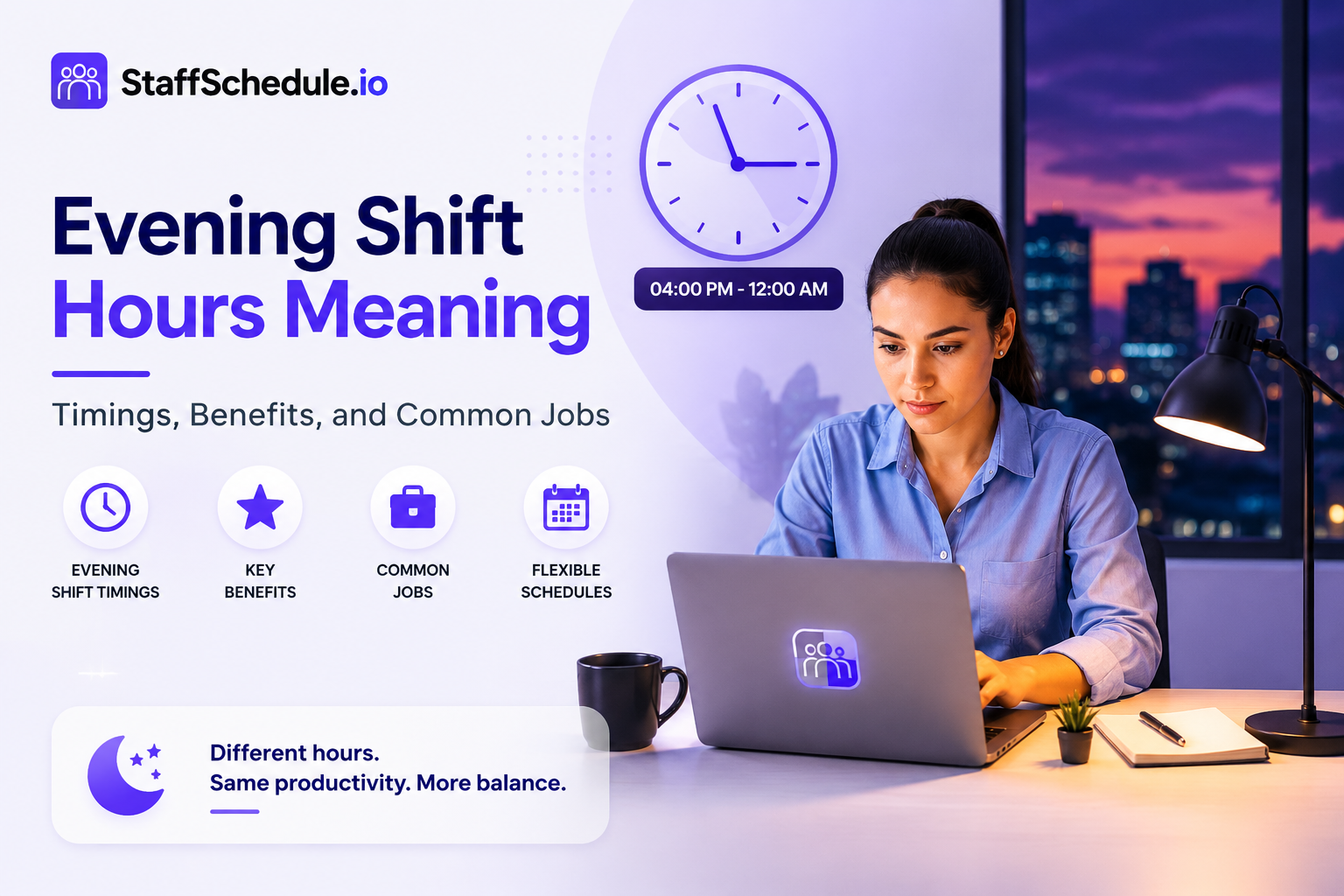
Many customer-facing industries also use Evening Shift Hours during busy afternoon and evening periods.
What Is Mid Shift Meaning?
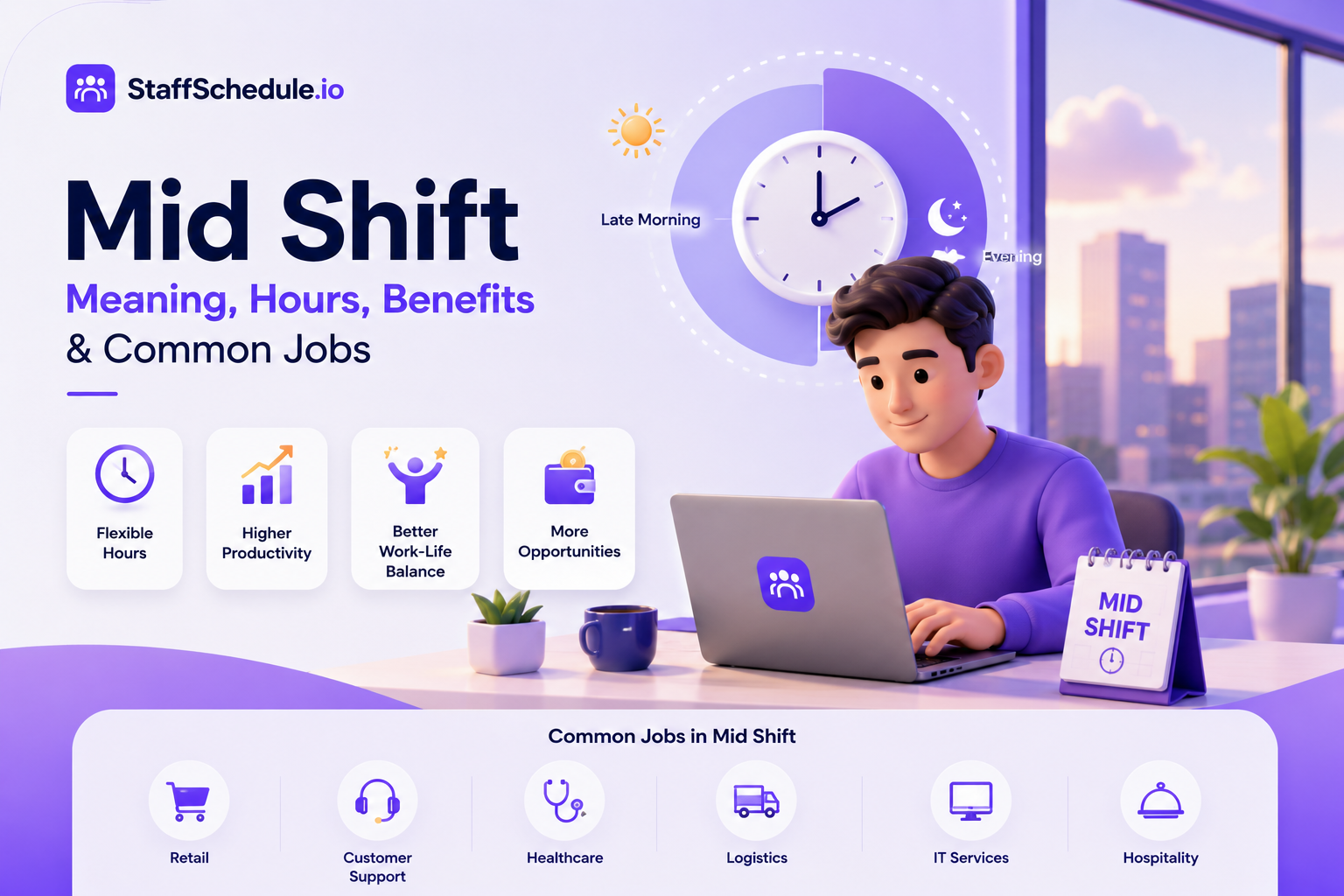
A mid shift is a work schedule that starts after the morning shift and finishes before or during the late evening. It is often used by businesses that become busier in the afternoon and need additional staff during peak hours.
Although there is no single schedule that every employer follows, most mid shifts fall between a standard day shift and a night shift. The exact hours depend on the industry, the workplace and the level of customer demand.
Related Read
Compare Night Shift Hours if you're considering overnight jobs or 24-hour industries.
Read our guide on Evening Shift Hours to understand another popular afternoon schedule.
Standard Mid Shift Hours
Most mid shifts begin between 10 AM and 2 PM and finish between 6 PM and 10 PM. These schedules help businesses maintain steady staffing during the busiest part of the day.
Common Mid Shift Timings
Some of the most common mid shift schedules include:
- 10 AM to 6 PM
- 11 AM to 7 PM
- 12 PM to 8 PM
- 1 PM to 9 PM
- 2 PM to 10 PM
These hours can vary from one workplace to another but they generally cover the period between morning and night shifts.
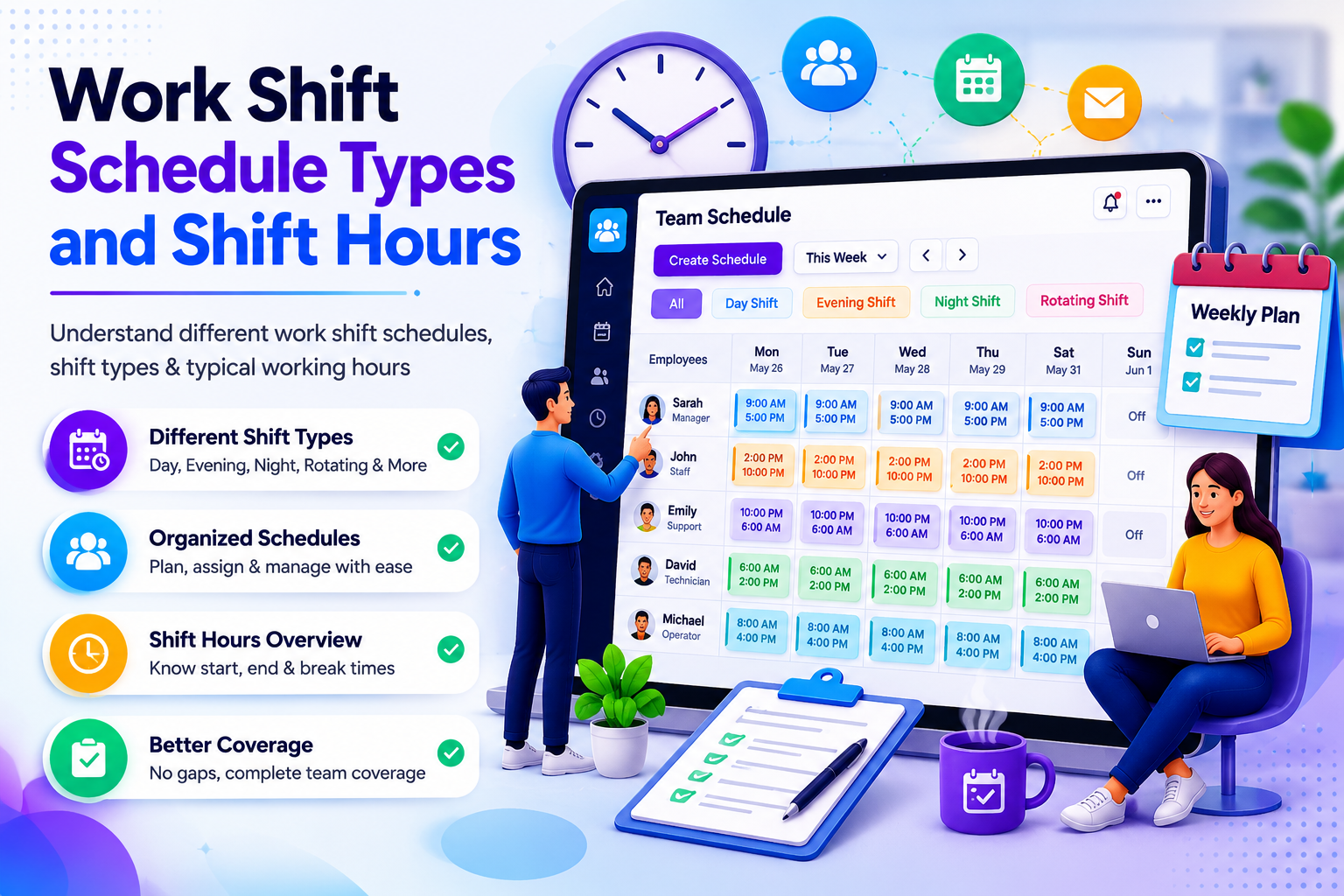
Different employers use different schedules. Our guide on Work Shift Schedule explains how businesses organize multiple shifts throughout the day.
Mid Shift vs Day Shift vs Night Shift
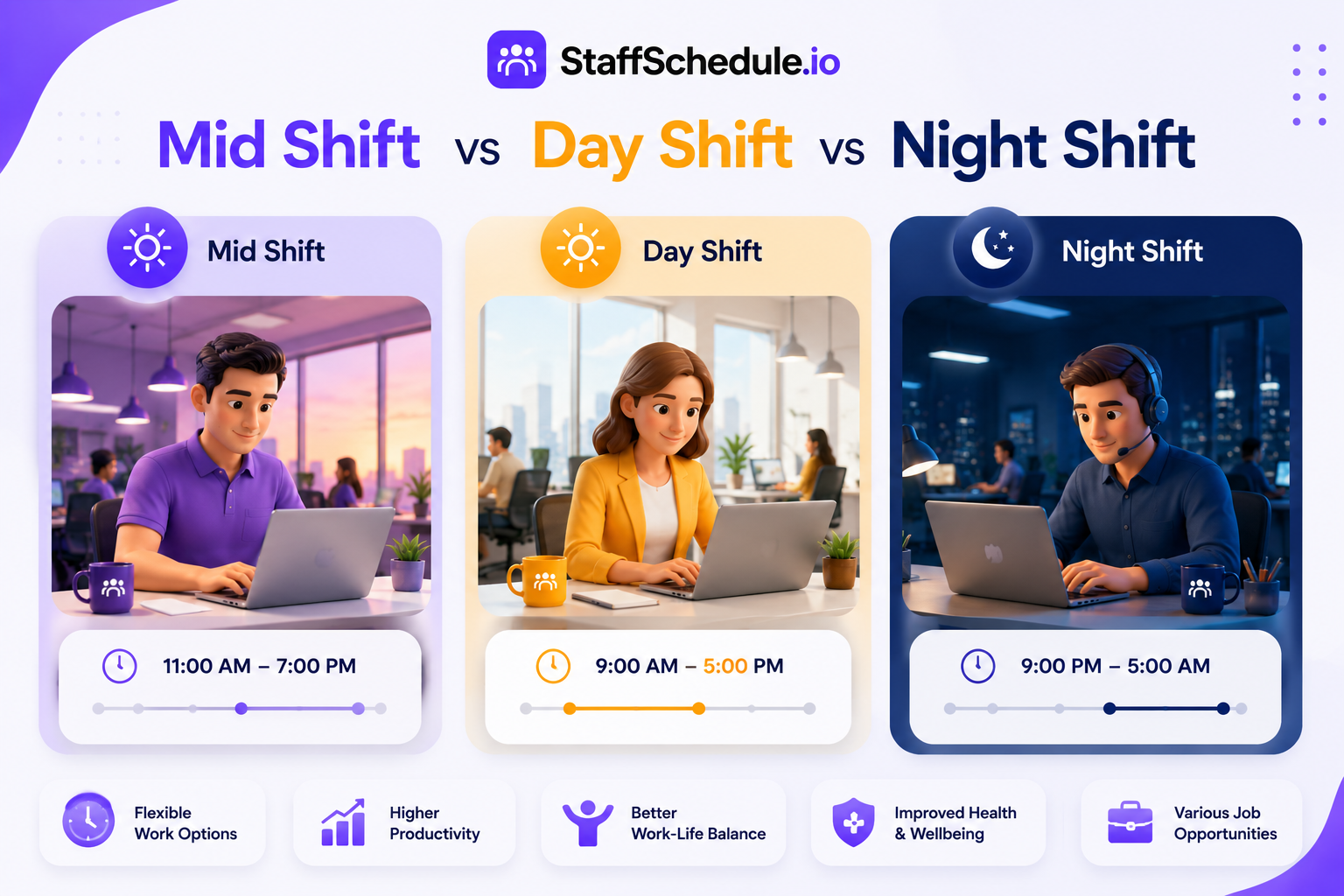
The biggest difference between these shifts is the time employees begin and finish work. Each schedule is designed to match different business needs and operating hours.
| Shift Type | Typical Hours |
| Mid Shift | 10 AM – 6 PM, 12 PM – 8 PM, or 2 PM – 10 PM |
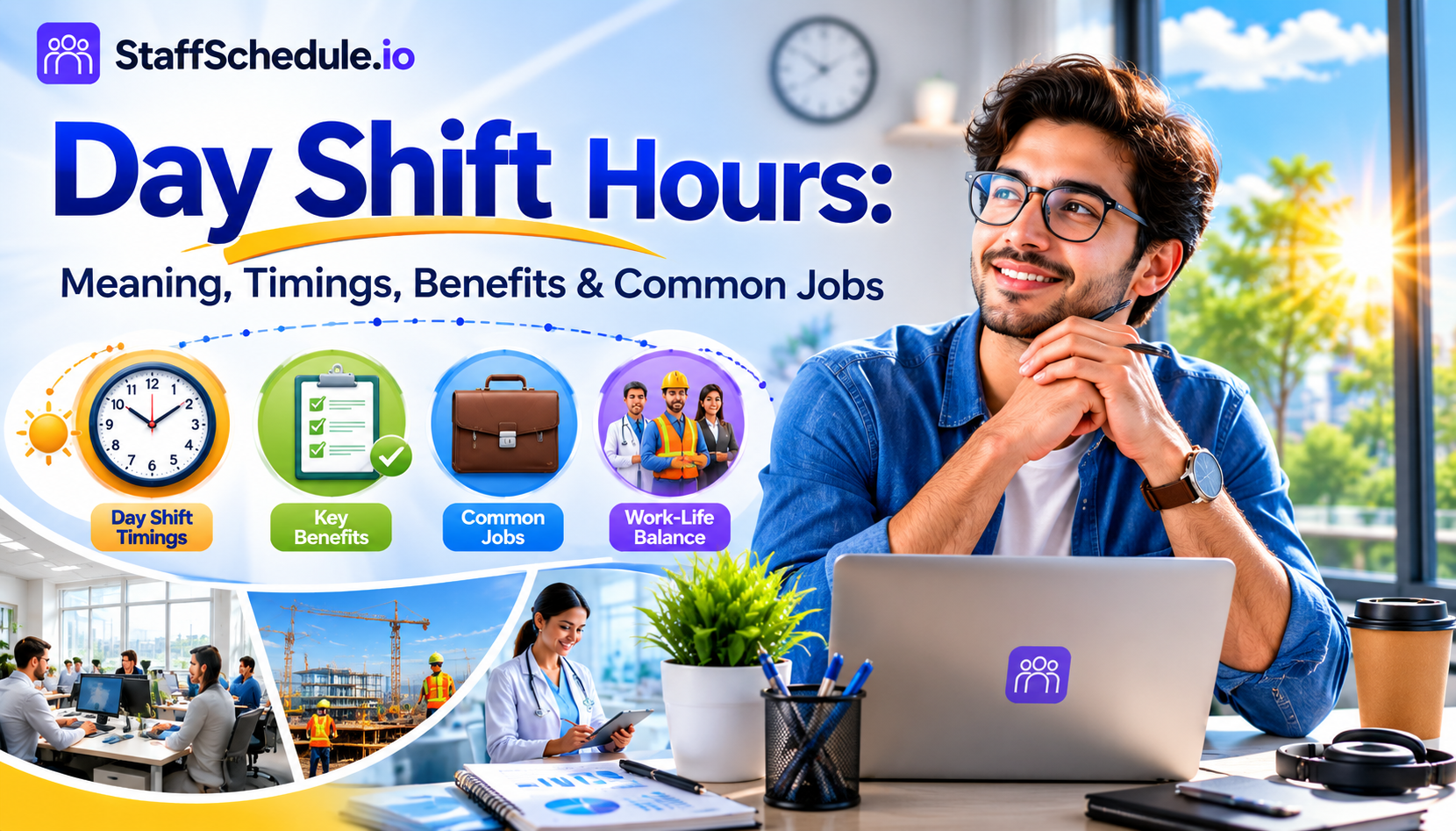
| Day Shift | 7 AM – 3 PM, 8 AM – 4 PM, or 9 AM – 5 PM |
| Night Shift | 10 PM – 6 AM or 11 PM – 7 AM |
Mid Shift
A mid shift starts later than a day shift and usually finishes before or during the evening. It is commonly used when businesses expect higher customer activity in the afternoon.
Day Shift
A day shift begins in the morning and ends during the afternoon or early evening. It is the standard schedule for many offices, schools, banks and other daytime businesses.
Night Shift
A night shift starts late in the evening and continues overnight. It is mostly used in workplaces that provide services around the clock such as hospitals, security companies, manufacturing plants and emergency services.
Common Jobs That Use Mid Shifts
A mid shift is common in jobs where work continues from late morning into the evening. Instead of starting early or working overnight, employees begin later in the day and finish after the busiest hours have passed.
Retail
Large stores and supermarkets often assign mid shifts to cashiers, sales associates and floor staff. These employees are available when more shoppers arrive during the afternoon and early evening.
Retail businesses often use Retail Employee Scheduling Software to assign mid shifts during peak shopping hours and avoid understaffing.
Restaurants and Hospitality
Mid shifts are common for servers, hotel receptionists, baristas, and kitchen staff. These hours usually cover both lunch service and the start of the dinner period.
Restaurants frequently rely on Restaurant Scheduling Software to manage lunch, dinner, and mid-shift employee schedules efficiently.
Healthcare
Doctors' offices, clinics and hospitals also use mid shifts. Nurses, medical assistants and reception teams may work these schedules to support patients throughout the day.
Hospitals and clinics use Healthcare Staff Scheduling Software to coordinate nurses, receptionists, and medical teams across different shifts.
Warehousing and Logistics
Warehouse employees, inventory teams and shipping staff often work mid shifts to prepare orders and organize deliveries before the next shift begins.
Distribution centers improve staffing with Warehouse Employee Scheduling Software to keep inventory and shipping operations running smoothly.
Benefits of Working Mid Shifts
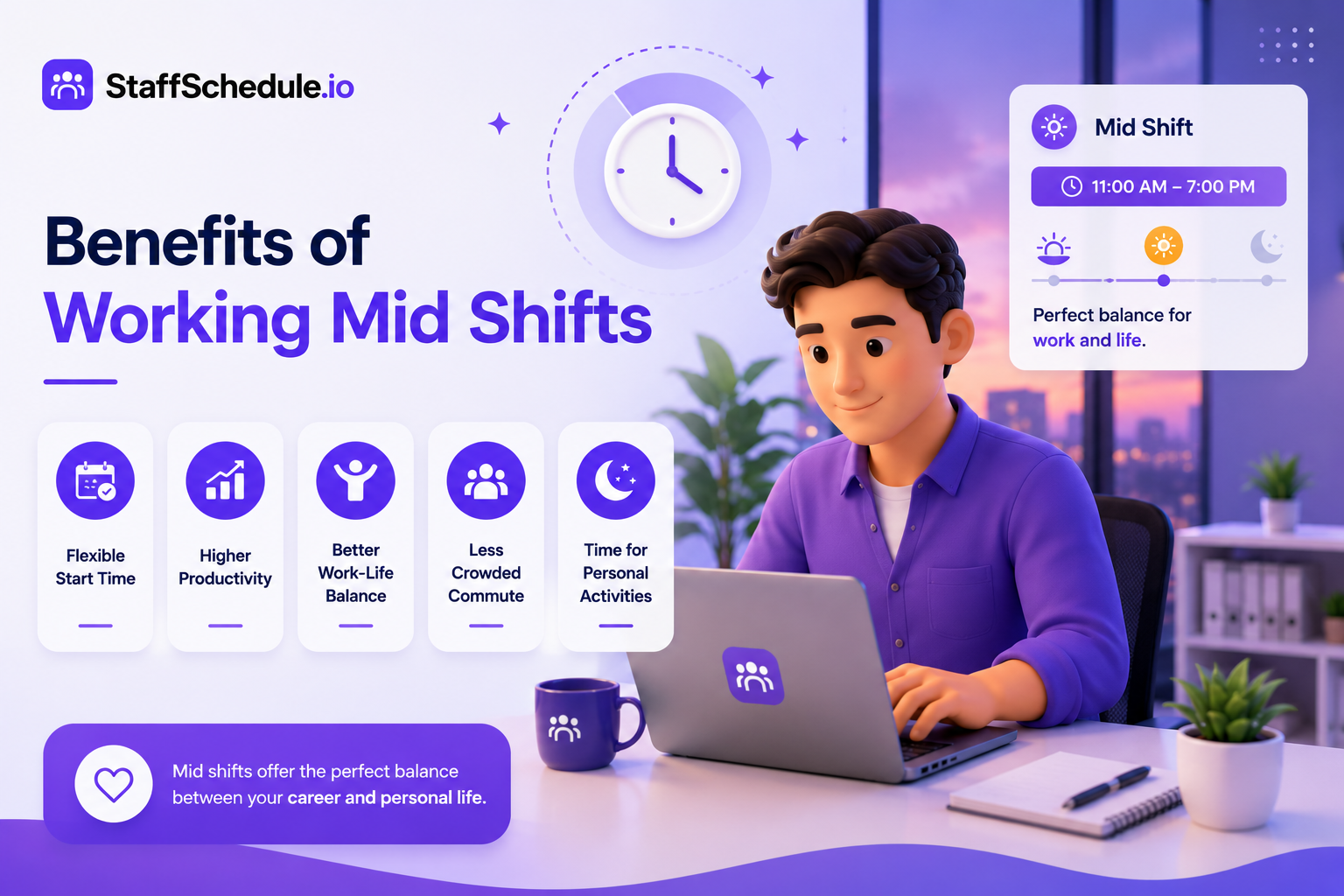
Mid shifts suit people who do not want to start work early in the morning or stay on duty throughout the night. They offer a schedule that falls between both options and can be easier to manage for many employees.
Another advantage is having extra time before work begins. Some people use the morning to attend appointments, study, exercise or complete personal tasks without taking time off.
Mid shifts can also make the working day feel more balanced. Employees finish later than a day shift but still return home earlier than those working overnight making it easier to maintain a regular routine.
Employees using digital scheduling tools can easily view upcoming shifts, request changes, and stay informed about schedule updates through modern Employee Scheduling Software.
Challenges of Working Mid Shifts
Mid shifts do not suit everyone. Since these hours usually cover part of the afternoon and evening, employees may have less time for family dinners, social plans, or activities that happen after work.
The finishing time can also vary from one workplace to another. In some jobs employees may leave in the evening while others finish later at night. This can make it harder to follow the same routine every day.
For people who prefer fixed daytime hours or early mornings adjusting to a mid shift may take time. Once a regular schedule is established, many employees find it easier to settle into the routine.
Using Staff Scheduling Software helps employers reduce scheduling conflicts and gives employees better visibility into upcoming work hours.
Frequently Asked Questions
Final Thoughts
A mid shift offers a practical option for employees who prefer working later than a morning shift but do not want an overnight schedule. While the exact hours can differ between workplaces, this shift is commonly used in industries that stay active throughout the afternoon and evening.
Understanding the meaning of a mid shift, its usual timings, and the jobs that use it can help you choose a schedule that fits your daily routine and career goals. Before accepting any role it is always worth checking the exact shift hours since they can vary from one employer to another.
If you're responsible for creating employee schedules, our Staff Scheduling Software helps businesses build smarter work schedules, manage shift rotations, and keep teams organized.