Many businesses continue operating after regular working hours. Hospitals, factories, transportation services hotels and customer support teams often need employees available throughout the night.
Because of this, night shifts are common in many industries. While schedules can vary from one workplace to another, most follow similar overnight working hours.
Understanding night shift hours can help you know what to expect before starting an overnight schedule and decide whether it matches your daily routine.
Related Read
What Are Night Shift Hours?
Night shift hours are work hours that take place during the night and continue into the early morning. These schedules are commonly used by businesses that operate beyond normal daytime hours.
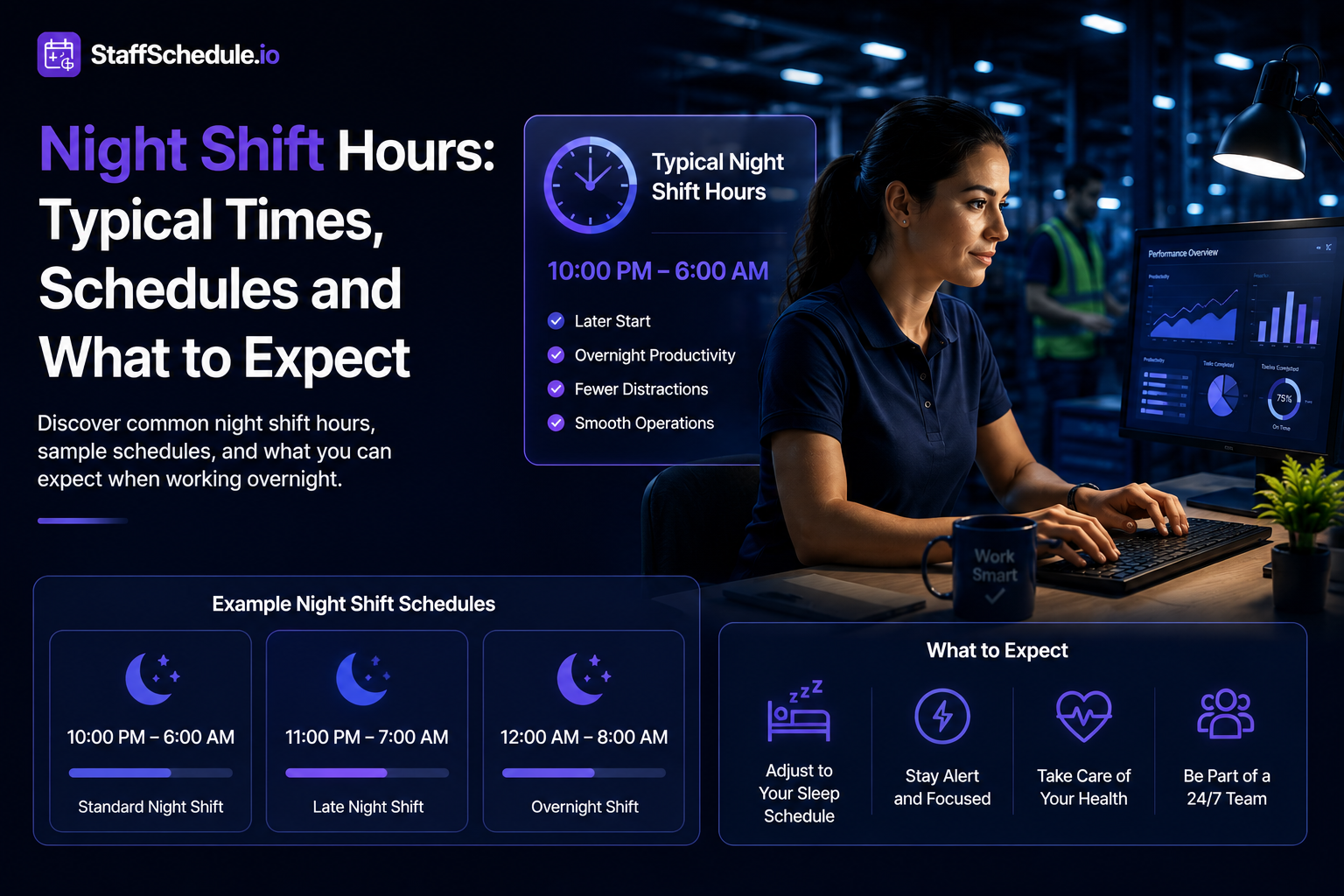
Most night shifts begin between 10:00 PM and 12:00 AM and finish the next morning. Common schedules include:
| Night Shift Schedule | End Time |
| 10:00 PM | 6:00 AM |
| 11:00 PM | 7:00 AM |
| 12:00 AM | 8:00 AM |
Night shifts are also known as overnight shifts, midnight shifts or third shifts. Although the names may differ they generally describe employees who work through the night and finish in the morning.
Manage Night Shifts With Ease
Create schedules, track shifts, and keep overnight teams organized with StaffSchedule.io.
Start Free TrialIndustries That Commonly Use Night Shifts

Night shifts are most common in industries that need employees available 24 hours a day. These businesses cannot pause operations when regular office hours end.
Some of the industries that regularly use night-shift workers include:
| Industry | Why Night Staff Are Needed |
| Healthcare | Patients need care day and night |
| Security | Buildings and facilities require monitoring |
| Manufacturing | Production often continues overnight |
| Transportation | Goods and passengers move around the clock |
| Hospitality | Hotels operate 24 hours a day |
| Customer Support | Global businesses serve customers in different time zones |
Without night-shift employees many essential services would not be able to operate continuously.
Related Read
Pros and Cons of Working Night Shift
Night shifts work well for some people but they are not the right choice for everyone. Before taking a night-shift job it helps to understand both the advantages and the challenges.
Pros
- Less traffic when traveling to and from work.
- More free time during the day for personal tasks.
- Some employers offer higher pay for overnight work.
- Workplaces are often quieter during night hours.
- Daytime appointments are easier to manage.
Cons
- Sleeping during the day can be difficult.
- Family and friends may be available at different times.
- It can take time for the body to adjust to a new schedule.
- Missing sleep can leave employees feeling tired.
- Maintaining a regular routine may become challenging.
Many employees enjoy night shifts because they fit their lifestyle while others prefer traditional daytime schedules. The best choice depends on personal preferences and daily responsibilities.
Tips for Adjusting to a Night Shift Schedule
Switching to a night shift can feel unusual at first. A few simple habits can make the transition easier.
- Try to sleep at the same time every day even on days off.
- Keep your bedroom dark and quiet while resting.
- Drink enough water during your shift.
- Eat regular meals instead of skipping them.
- Use your breaks to relax and recharge.
- Give yourself time to adjust to the new routine.
Most people need a few weeks before a night-shift schedule starts to feel normal. Staying consistent usually makes the process easier.
Frequently Asked Questions
Final Thoughts
Night shift hours are common in industries that operate around the clock. While schedules can vary most night shifts begin late in the evening and end the next morning.
Before choosing a night-shift job it is important to understand the working hours daily routine and lifestyle changes that may come with it. For some people night work offers flexibility and convenience while others may prefer traditional daytime schedules.
The best shift is the one that fits your responsibilities, sleep habits and personal preferences.