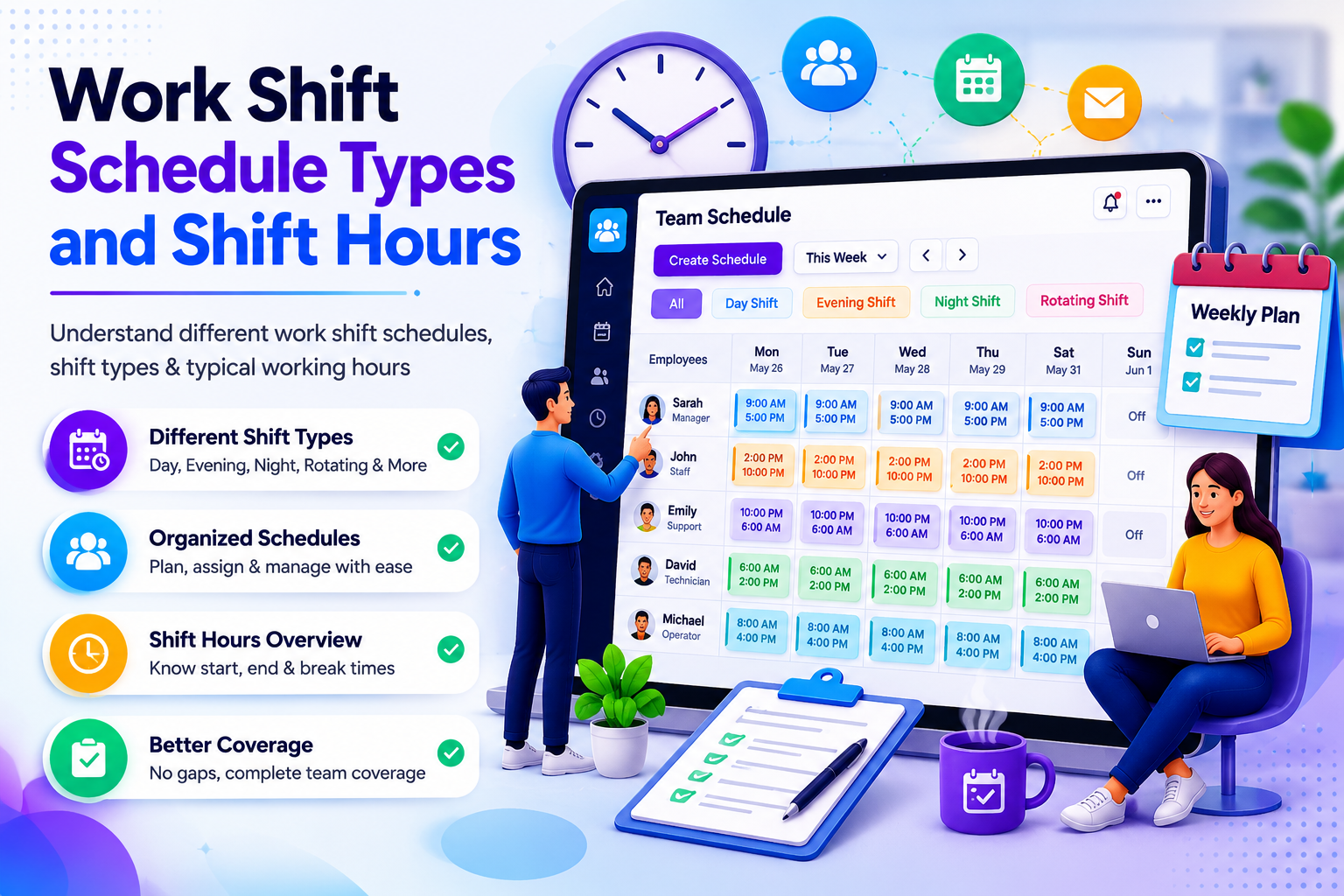

For many employees the day shift is considered the standard work schedule. It follows the hours when most businesses are active and when schools, banks and public services are open.
Because day shifts align with normal daily routines they are often the preferred choice for people who want predictable working hours and evenings free for personal activities. They are also the most widely used schedules across office environments education healthcare retail and many other industries.
Understanding typical day shift hours can help job seekers compare opportunities and choose a schedule that matches their lifestyle and responsibilities.
Related Read
What Are Day Shift Hours?
Day shift hours refer to the part of the day when most people are at work. These shifts usually start in the morning and finish before evening.
In many workplaces the day shift is the main schedule used for daily operations. It follows the hours when businesses are busiest and when most services are available.
Standard Day Shift Hours
Most day shifts begin between 7 AM and 9 AM and finish between 3 PM and 5 PM. The exact timing can vary depending on the workplace and industry.
Common Day Shift Timings
Some common day shift schedules include:
- 7 AM to 3 PM
- 8 AM to 4 PM
- 9 AM to 5 PM
- 8 AM to 5 PM
These are considered typical day shift hours because they fall within regular daytime working hours.
Related Read
Morning Shift vs Day Shift vs Night Shift
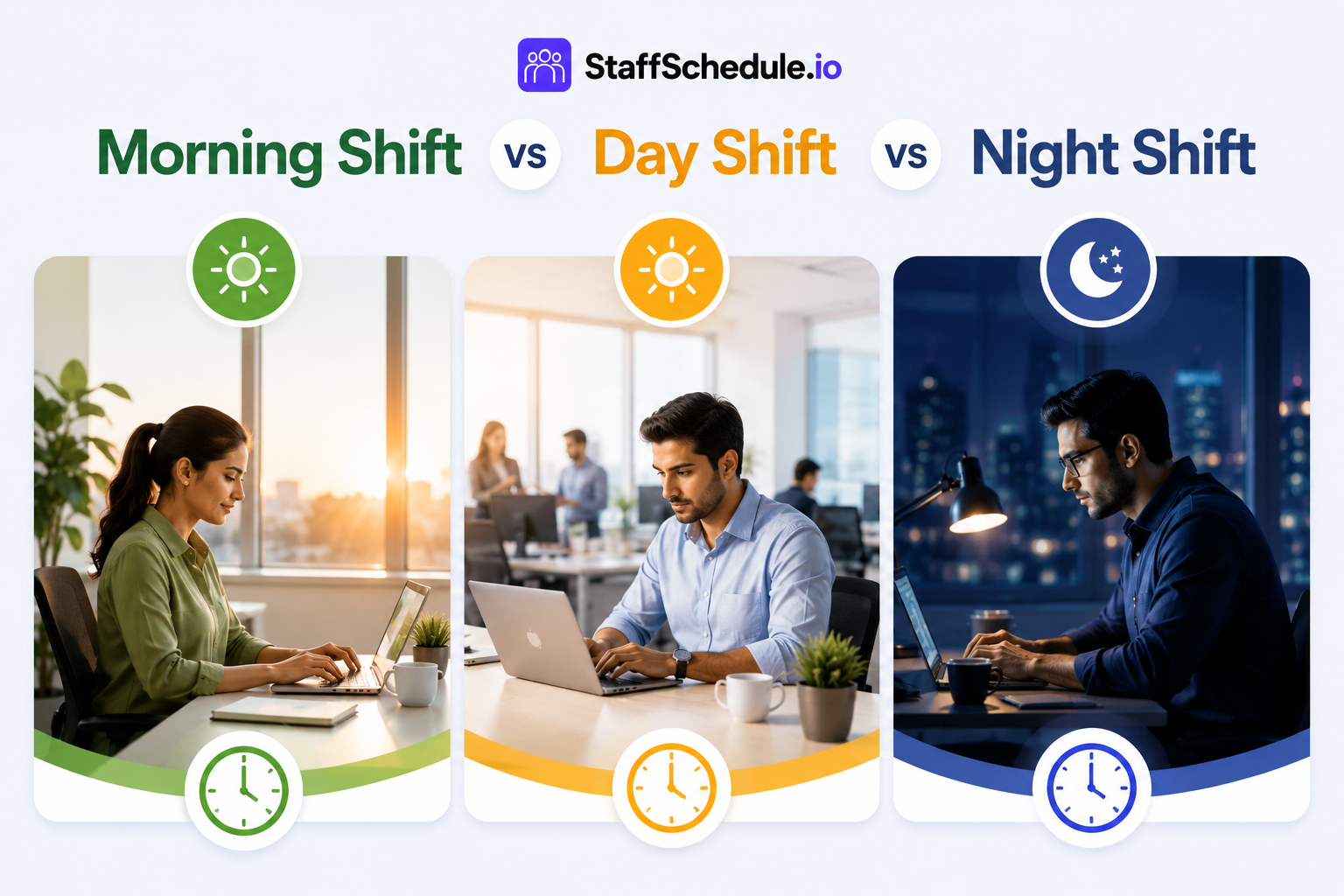
Although these terms are often used together they can refer to different schedules depending on the workplace.
| Shift Type | Typical Hours |
| Morning Shift | 6 AM – 2 PM |
| Day Shift | 8 AM – 4 PM or 9 AM – 5 PM |
| Night Shift | 10 PM – 6 AM |
Morning Shift Hours
Morning shifts start earlier than a standard day shift. They are common in manufacturing, healthcare transportation and businesses that need staff before regular working hours begin.
Day Shift Hours
Day shifts follow the hours most people associate with a normal workday. These schedules are widely used in offices, schools, banks and many customer-facing businesses.
Night Shift Hours
Night shifts begin late in the evening and continue overnight. They are often used in industries that operate around the clock such as healthcare, security and emergency services.
The main difference between these shifts is the time employees start and finish work. Each schedule suits different industries, lifestyles and staffing needs.
Related Read
Common Jobs That Use Day Shifts
Day shifts are the preferred schedule for many industries because they align with the hours when most customers, clients and organizations are active.
Office and Administrative Jobs
Most office employees work during the day. Administrative assistants, accountants, managers and office coordinators typically follow day shift schedules.
Retail and Customer Service
Many retail stores and customer service teams schedule employees during daytime hours when customer activity is steady and business operations are at their busiest.
Healthcare
Not all healthcare employees work overnight. Many doctors, reception staff, therapists and healthcare professionals work regular day shifts throughout the week.
Education
Schools, colleges, and training institutes often rely on consistent daytime schedules for staff and faculty. Understanding Education Staff Scheduling can help administrators manage classes, employee availability, and daily operations more effectively.
Benefits of Working Day Shifts
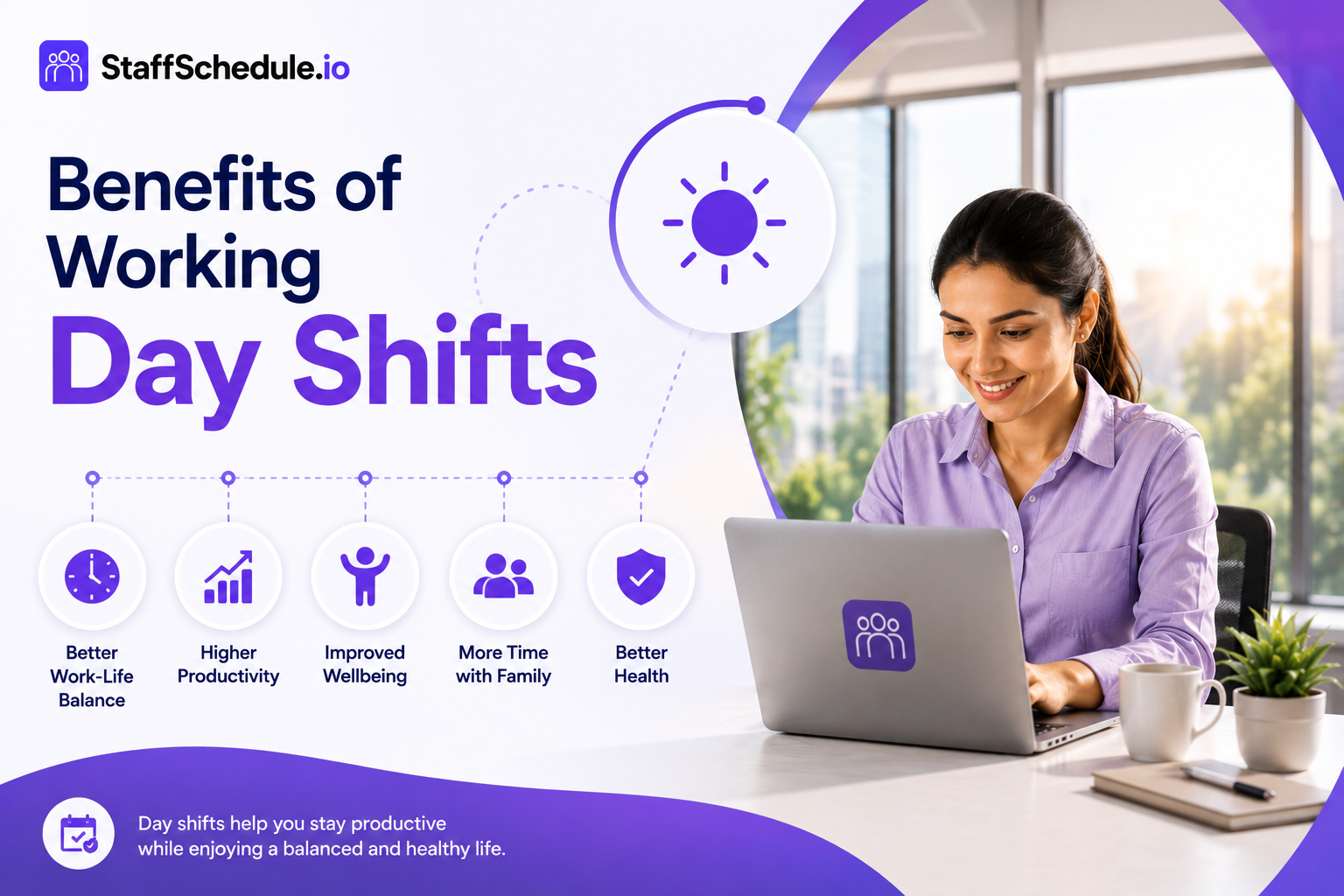
Day shifts remain the preferred choice for many employees because they fit naturally into everyday life. Most businesses, schools, banks and public services operate during the day making it easier to manage work alongside personal responsibilities.
Another advantage is having evenings free. This gives people more time to spend with family, attend social events, relax or pursue hobbies after work.
Many employees also find it easier to maintain a consistent routine with a day shift. Regular working hours can make it simpler to plan meals, exercise, appointments and daily activities throughout the week.
Most businesses use Employee Scheduling Software to create shifts, reduce scheduling conflicts, and ensure employees are assigned to the right working hours.
Challenges of Day Shift Work
Although day shifts are popular, they are not without challenges. One common issue is dealing with morning commutes when roads and public transportation are often at their busiest.
For some employees, starting work early can also be difficult. People who prefer later schedules may find it harder to adjust to early alarms and morning routines.
Day shifts can also limit flexibility during business hours. Tasks such as appointments, errands or personal commitments often need to be planned around the workday rather than completed during it.
Maintaining reliable attendance is important for day shift teams. Employee Attendance Tracking tools help managers monitor punctuality and attendance records.
Frequently Asked Questions
Final Thoughts
Day shift hours remain the most common work schedule across many industries. They provide predictable working hours and fit well with the daily routines followed by most people.
While every workplace has its own schedule most day shifts begin in the morning and finish before evening. Understanding typical day shift timings can help you compare job opportunities and choose a schedule that works best for your lifestyle and responsibilities.