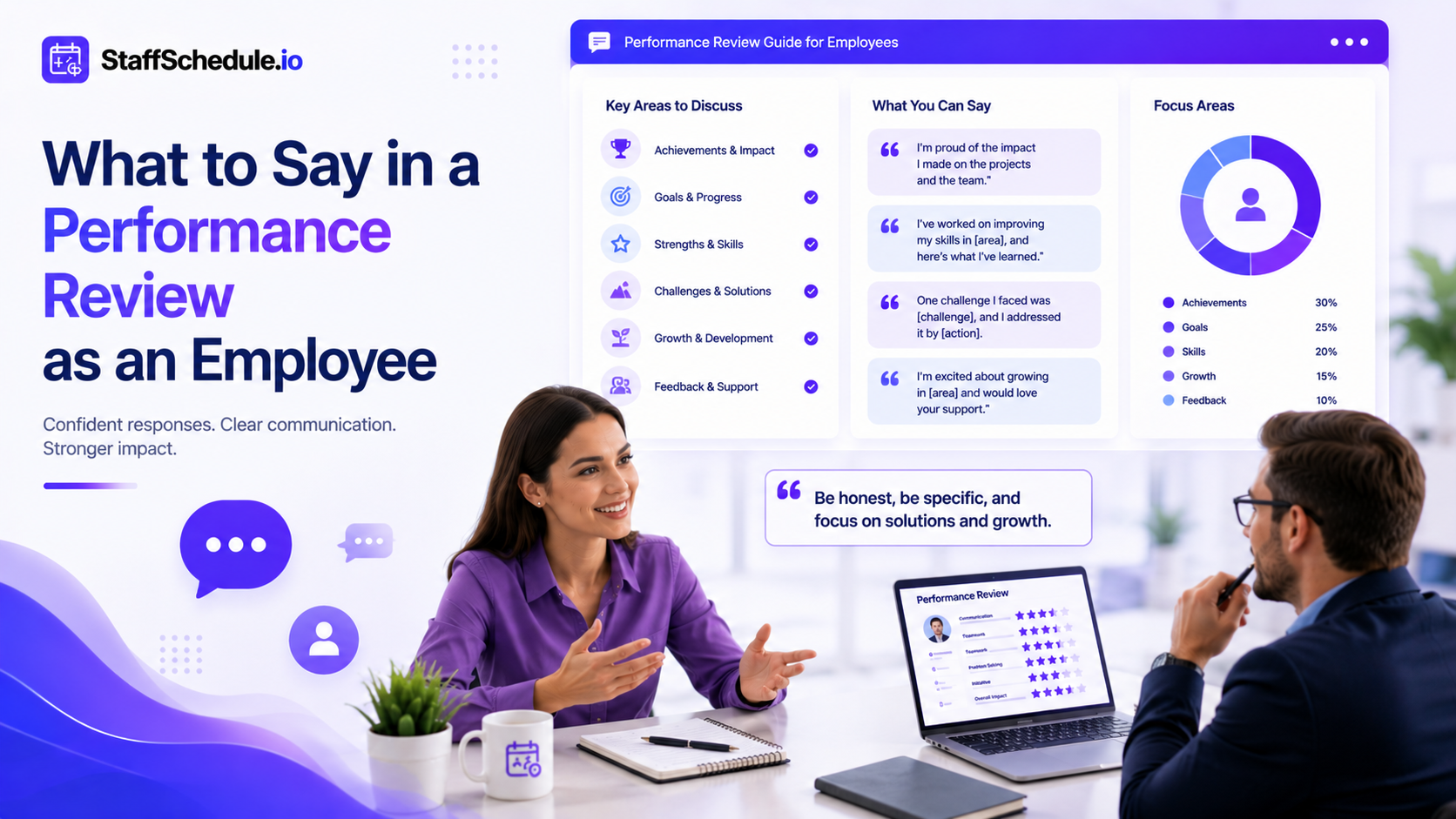
A performance review gives you a chance to talk about your work and share your side of the story. It is the time to discuss what you have done well, what you have learned, and where you would like to improve.
Many employees feel nervous before a review because they are not sure what to say. Some worry about talking about their achievements while others struggle to explain their challenges in the right way.
The good news is that you do not need complicated words or perfect answers. A good performance review is simply an honest conversation about your work, your progress, and your goals.
In this guide you will find What to Say in a Performance Review as an Employee Example that can help you feel more confident during your next performance review.
Why Employee Performance Reviews Matter
Many people think a performance review is only about being judged by a manager. In reality, it is also a chance for employees to share their work, discuss challenges, and talk about the progress they have made.
A review helps make sure that both the employee and manager are on the same page. It gives employees an opportunity to explain their efforts and discuss things that may not be visible in daily work.
Performance reviews can also lead to useful conversations about new responsibilities, training opportunities and future career plans. When employees take an active role in the discussion, reviews become much more valuable than a simple evaluation.
Related Read
What to Say About Your Achievements
A performance review is one of the few times when it is completely okay to talk about the work you have done. Many employees stay too quiet during reviews and forget to mention things they worked hard to achieve.
The best way to discuss achievements is to keep things simple. Talk about the work you completed, the responsibilities you handled, and the positive results that came from your efforts.
Talking About Completed Projects
When discussing projects, explain what you worked on and what happened in the end. Focus on your role instead of trying to impress with big claims.
Example:
During this review period I completed several important tasks and projects that were assigned to me. I stayed focused on deadlines and made sure my work was completed properly.
Highlighting Results and Contributions
You can also mention ways your work helped the team or workplace. Think about improvements, solutions or extra support you provided during the year.
Example:
I was able to support my team when workloads increased and helped complete important work on schedule. I also looked for practical ways to make daily tasks easier and more organized.
Mentioning New Skills You Learned
Learning is part of every job. If you gained new knowledge or improved a skill it is worth mentioning during your review.
Example:
This year I learned new tools and processes that helped me do my job more effectively. As I became more familiar with them I was able to handle tasks with greater confidence.
Related Read
How to Talk About Areas for Improvement
No employee is perfect. That is why managers often ask what you would like to improve. Many people make the mistake of saying they have no weaknesses while others focus too much on their mistakes.
A better approach is to choose an area where you are still learning and explain what you are doing to improve it. This shows self-awareness and a willingness to learn.
Being Honest Without Being Negative
You do not need to be overly critical of yourself. Simply mention an area where you would like to get better and explain how you are working on it.
Example:
I would like to become better at managing several tasks at the same time. I have started planning my work more carefully so I can stay organized during busy periods.
Examples of Improvement Statements
Here are a few simple examples you can use during a review.
Example 1
I would like to improve my presentation skills and feel more comfortable speaking in front of larger groups.
Example 2
I am working on responding to emails and messages more quickly when workloads become busy.
Example 3
I would like to learn more about other areas of the business so I can better understand how different teams work together.
Related Read
Self-Review Examples for Employees
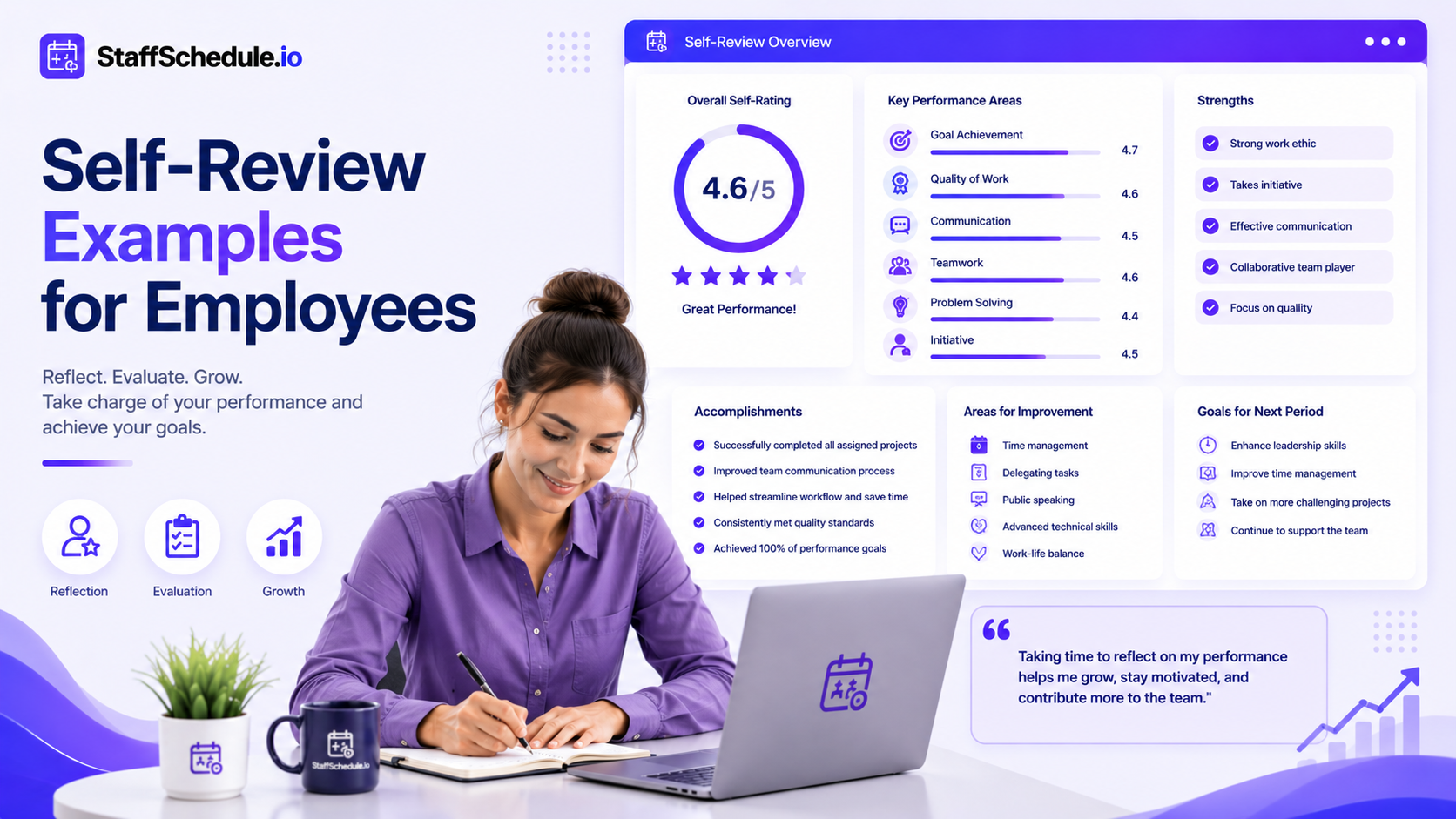
Writing about your own performance can feel awkward. Some employees write only a few words, while others try to make every sentence sound impressive. The best self-reviews are simple, honest and based on real work.
Example for Strong Performance
This year I handled my responsibilities well and stayed focused on completing my work on time. I was able to manage my workload effectively and support my team whenever additional help was needed. I also adapted well to changing priorities and remained committed to delivering good results.
Example for Average Performance
Over the review period I completed my regular duties and met the requirements of my role. I faced a few challenges but continued to learn from them and improve my approach to work. I believe I have gained useful experience that will help me perform better in the future.
Example for Growth and Improvement
This year helped me build confidence in several areas of my job. I became more comfortable handling responsibilities on my own and learned new ways to solve everyday problems. I still have areas where I want to improve, but I am pleased with the progress I have made so far.
Comments to Write After a Performance Review
After a performance review, some companies ask employees to leave a short comment about the discussion. This comment does not need to be long. A few clear sentences are usually enough.
The purpose is to show that you understand the feedback and appreciate the opportunity to discuss your performance.
Example 1
Thank you for the feedback and guidance provided during this review. The discussion helped me better understand my strengths and the areas where I can continue improving.
Example 2
I appreciate the time taken to review my performance. The feedback was helpful and gave me a clearer understanding of what I should focus on moving forward.
Example 3
Thank you for the review and the constructive feedback. I look forward to applying the suggestions discussed and continuing to develop my skills.
Example 4
I found this review helpful and informative. The conversation provided useful insights that I can use in my daily work.
Example 5
I appreciate the opportunity to discuss my performance and future goals. The feedback will help me continue improving in my role.
Related Read
Common Mistakes to Avoid During a Review
A performance review is your opportunity to share your thoughts and discuss your work. Small mistakes can make the conversation less effective so it helps to be prepared.
Focusing Only on Problems
Some employees spend most of the review talking about things that went wrong. While it is okay to discuss challenges it is also important to mention work that went well.
Giving Very Short Answers
Answering every question with one or two words can make the discussion difficult. Try to explain your thoughts clearly and provide examples when needed.
Taking Feedback Personally
Feedback is meant to help you understand how others see your work. Listening carefully and staying open to suggestions can make the conversation more useful.
Comparing Yourself to Others
A performance review should focus on your own work and responsibilities. Comparing yourself to coworkers often takes the discussion in the wrong direction.
Arriving Unprepared
It helps to spend a few minutes thinking about your work before the review. Remembering key projects, challenges and lessons learned will make it easier to answer questions confidently.
Frequently Asked Questions
Final Thoughts
Knowing what to say in a performance review can make the entire process much less stressful. You do not need fancy words or perfect answers. The best approach is to speak honestly about your work, discuss what you have learned and be open about areas where you would like to improve.
Whether you are filling out an appraisal form, writing a self-review or meeting with your manager, focus on real experiences and clear examples. Simple and honest responses often leave a stronger impression than long and complicated statements.
A performance review is not just about looking at the past. It is also a chance to discuss where you want to go next and how you can continue building your skills. When you approach the conversation with confidence and preparation, it becomes a valuable opportunity rather than something to worry about.